
Spain Weather: Climate, Seasons, and Practical Tips

Introduction
Are you planning a trip, a stay, or even a property acquisition project in Spain? Understanding Spain's weather and climate is the first step to ensuring a successful experience. Spain is not monolithic: its climate varies radically from north to south and from the coasts towards the interior.
As specialists in the local real estate market, we know that climate is a decisive factor when choosing a residence. This guide details Spain's 5 distinct climatic zones, seasonal specificities, and the best times to visit, helping you make an informed decision. For real-time forecasts, you can consult authoritative sources like Spain Weather – Met Office.
1. Understanding Spain's Climate: 5 Distinct Zones
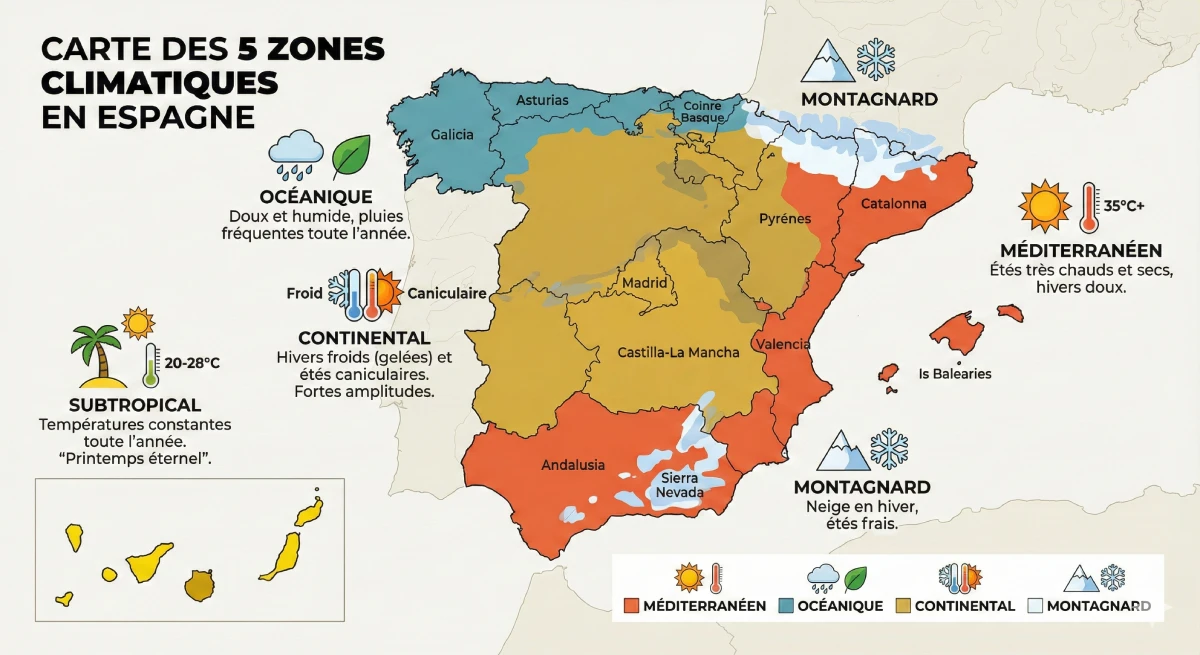
Spain predominantly enjoys a Mediterranean climate, but its complex geography creates several important climatic nuances to be aware of before investing or traveling.
| Climatic Zone | Key Regions | Characteristics |
|---|---|---|
| Mediterranean | East Coast (Catalonia, Valencia), Andalusia, Balearic Islands | Very hot and dry summers (35°C+), mild winters. |
| Oceanic | North (Galicia, Basque Country, Asturias) | Mild and humid, frequent rainfall throughout the year. |
| Continental | Centre (Madrid, Castile-La Mancha) | Cold winters (frosts) and sweltering summers. Strong temperature variations. |
| Mountain | Pyrenees, Sierra Nevada | Snow in winter, cool summers. |
| Subtropical | Canary Islands | Constant temperatures (20-28°C) year-round. "Eternal Spring". |
2. Seasons in Spain: What to Expect?
Here's a season-by-season overview to help you choose the best dates for your visit or property exploration.
Spring (March to May)
Often considered the ideal season to discover Andalusia (Seville, Cordoba), Barcelona, or Madrid. Temperatures are very pleasant, nature is in bloom, and you can attend major events like Holy Week (Semana Santa).
Summer (June to August)
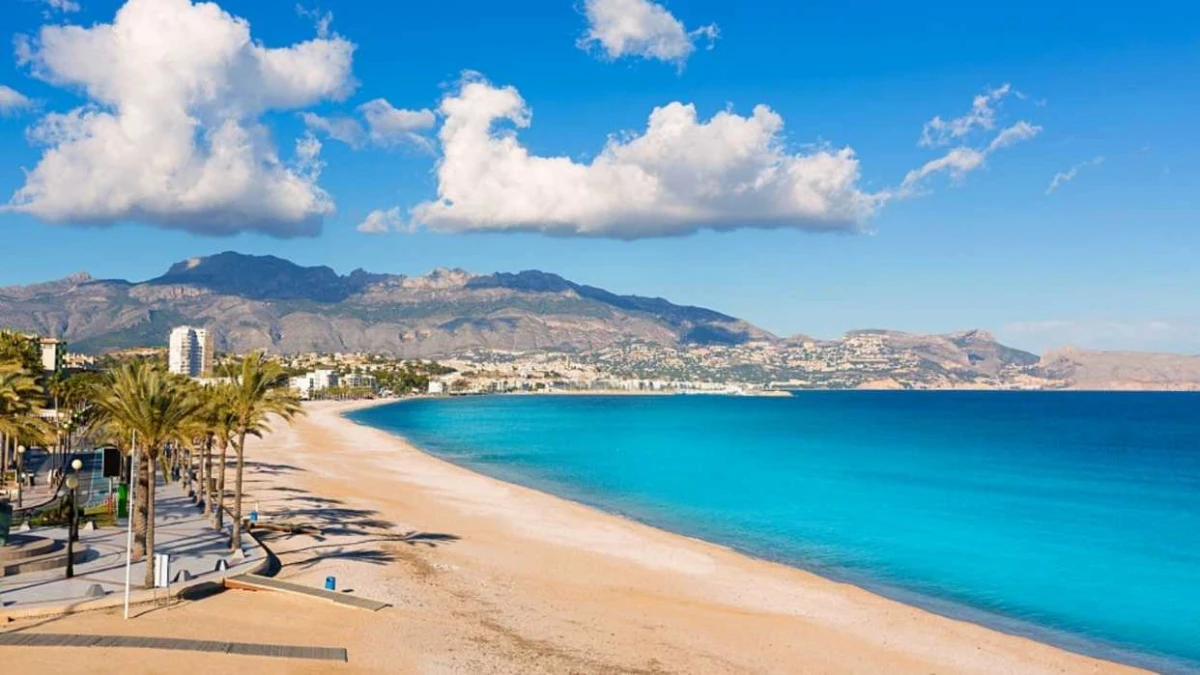
The season is very hot and dry in the south (Andalusia) and central regions (Madrid). It's the perfect time to enjoy the beaches on the Costa Brava, Costa Blanca, or Costa del Sol. Our experience shows that it's best to avoid visiting inland cities like Seville or Madrid in July and August, where temperatures often exceed 40°C.
Autumn (September to November)
An excellent season for visits. Temperatures remain warm and suitable for swimming in September on the Mediterranean coast. Tourist crowds thin out, and you can admire magnificent colours in the wine regions (Rioja) or in the north.
Winter (December to February)
Winter offers striking contrasts. It is mild and sunny in the south (Malaga, Alicante) and the Canary Islands. Conversely, it is cold and dry in Madrid (frequent frosts) and snowy in the mountains (Pyrenees, Sierra Nevada) for ski enthusiasts.
Temperature Chart
| City | Jan | Feb | Mar | Apr | May | Jun | Jul | Aug | Sep | Oct | Nov | Dec |
|---|---|---|---|---|---|---|---|---|---|---|---|---|
| Madrid | 6 | 8 | 12 | 14 | 19 | 25 | 30 | 30 | 25 | 17 | 11 | 7 |
| Barcelona | 10 | 11 | 13 | 15 | 18 | 22 | 26 | 26 | 23 | 19 | 14 | 11 |
| Seville | 11 | 13 | 16 | 18 | 22 | 27 | 33 | 33 | 28 | 22 | 16 | 12 |
| Valencia | 11 | 12 | 14 | 16 | 20 | 24 | 27 | 27 | 25 | 21 | 16 | 12 |
| Bilbao | 8 | 9 | 11 | 13 | 16 | 19 | 22 | 22 | 20 | 16 | 12 | 9 |
| Malaga | 12 | 13 | 15 | 17 | 20 | 24 | 27 | 28 | 25 | 21 | 17 | 13 |
| Las Palmas (Canary Islands) | 18 | 18 | 19 | 20 | 21 | 23 | 25 | 26 | 25 | 24 | 22 | 20 |
3. Weather by Region: Where to Go and When?
The choice of your property destination will heavily depend on the lifestyle and climate you are seeking.
Andalusia (Seville, Malaga, Costa del Sol)
Ideal in spring and autumn. Summer is very hot inland (up to 45°C in Seville), but tempered on the Costa del Sol. Winter is one of the mildest in continental Europe.
Mediterranean Coast (Valencia, Alicante, Murcia)
This is the quintessential Mediterranean climate, sought after by many expatriates. Summers are hot (often 30-35°C) and winters are very mild (rarely below 10°C during the day).

Northern Spain (Galicia, Basque Country)
Oceanic climate, "Green Spain". Expect frequent precipitation, but moderate temperatures. It's a perfect summer refuge to escape the scorching heat of the south.
Madrid and Inland Spain
The continental climate at its extreme: sweltering summers and cold winters. The intermediate seasons (spring and autumn) are highly recommended for visits.
Balearic Islands (Majorca, Ibiza)
Typical Mediterranean climate. The ideal tourist season runs from May to September. Winters are mild but can be humid.
Canary Islands (Tenerife, Gran Canaria)
The eternal spring. A very pleasant subtropical climate all year round (average 22-26°C). It is the ideal destination to escape the European winter.
4. Practical Weather Tips
"The most common mistake is underestimating the summer heat inland and the winter cold in Madrid. Adapting your wardrobe is essential for a successful stay."
- Pack light, loose-fitting, and breathable clothing (cotton, linen) for summer, especially in the south.
- Always bring a raincoat or umbrella if you visit the north (Galicia, Bilbao).
- Sunscreen, a hat, and sunglasses are essential everywhere in summer, even in cities.
- In winter, a warm coat is necessary in Madrid, but a simple sweater is often enough in Malaga or Valencia.
5. Best Times to Visit Spain
- For beaches and relaxation: June to September on the Mediterranean coast and in the Balearic Islands; all year round in the Canary Islands.
- For city visits (Madrid, Seville): April-May and September-October.
- For hiking: Spring in the north (Picos de Europa), autumn and winter in the south (Andalusia).
- To avoid crowds (and get lower prices): November to March (excluding end-of-year holidays).
Conclusion
🌤️ Whether you're seeking the sunshine of Andalusia, the freshness of the north, or the eternal spring of the Canary Islands, Spain offers weather suited to all tastes and life projects. Climate is a crucial factor in your expatriation or investment project.
Regularly consult our forecasts to adapt your stay. If your project focuses on the Costa Blanca, do not hesitate to consult the weather in Valencia and Alicante for precise local information.

What climate are you looking for?
Take advantage of market opportunities. Let's discuss your project.
Table of Contents
- Introduction
- 1. Understanding Spain's Climate: 5 Distinct Zones
- 2. Seasons in Spain: What to Expect?
- Spring (March to May)
- Summer (June to August)
- Autumn (September to November)
- Winter (December to February)
- Temperature Chart
- 3. Weather by Region: Where to Go and When?
- Andalusia (Seville, Malaga, Costa del Sol)
- Mediterranean Coast (Valencia, Alicante, Murcia)
- Northern Spain (Galicia, Basque Country)
- Madrid and Inland Spain
- Balearic Islands (Majorca, Ibiza)
- Canary Islands (Tenerife, Gran Canaria)
- 4. Practical Weather Tips
- 5. Best Times to Visit Spain
- Conclusion
FAQ: Weather and Climate in Spain
Our experts answer your most frequently asked questions about the Spanish climate, a key factor for your travel or real estate investment project.
No, Spain is not monolithic. Its climate varies radically, and the country is divided into 5 distinct climatic zones: Mediterranean (east coast, south), oceanic (north), continental (centre), mountainous (Pyrenees), and subtropical (Canary Islands).
Spring (March to May) and autumn (September to November) are considered the ideal seasons. Temperatures are very pleasant, nature is in bloom (spring), and tourist crowds are smaller, all while avoiding the extreme heat of summer.
The interior of Andalusia (such as Seville and Cordoba) and central Spain (Madrid) experience the hottest summers. Temperatures frequently exceed 40°C and can reach 45°C. The Mediterranean coasts are warm but tempered by the sea.
Northern Spain (Galicia, Basque Country, Asturias) has an oceanic climate. It is the wettest region, with frequent rainfall throughout the year, earning it the nickname "Green Spain".
Yes. Due to its continental climate, Madrid experiences cold and dry winters. Average temperatures in January are 6°C, and frosts are common. A warm coat is essential.
The Canary Islands are the perfect destination, with their subtropical climate offering an "eternal spring" (average temperatures of 18°C to 22°C in winter). Southern Andalusia (Malaga, Costa del Sol) is also very mild and sunny.
Yes, it is the Mediterranean climate par excellence, highly sought after by expats and international buyers. It is characterized by warm summers (30-35°C) and very mild winters, where daytime temperatures rarely drop below 10°C.
YMYL stands for "Your Money Your Life." Climate is a decisive YMYL factor because it directly influences your quality of life, the maintenance costs of your property (heating in winter in Madrid, air conditioning in summer in Seville), and the rental appeal of your investment.
Our expert advice (E-E-A-T) is to plan your visits in spring (April-May) or early autumn (September-October). You will avoid extreme heat and crowds, allowing you to evaluate properties under optimal conditions.
Yes. Mountainous climate zones, such as the Pyrenees (in the north) and the Sierra Nevada (near Granada, in Andalusia), receive snow in winter and have ski resorts.
The difference is significant. Madrid (central, continental climate) has cold winters with frosts and scorching summers. Malaga (south, Mediterranean climate) has some of the mildest winters in Europe (average of 12-13°C) and hot summers tempered by the sea.
It depends on the destination. A raincoat or umbrella is essential if you visit the north (e.g., Bilbao, Galicia) in any season. It is generally unnecessary in summer on the Mediterranean coast or in Andalusia.
The ideal tourist and climatic season for the Balearic Islands runs from May to September. Winters there are mild but can be wetter than on Spain's south coast.
Yes, the north (Galicia, Basque Country) is a perfect summer retreat for those looking to escape the scorching heat of the south and centre. The oceanic climate there guarantees moderate temperatures and green landscapes.
Expect extreme heat. Although the average maximum is 33°C, temperatures very often exceed 40°C and can reach 45°C. It is advisable to avoid visiting the city during the hottest hours.


