What is the Oficina de Extranjeros in Spain?

What is Spain's Oficina de Extranjeros (Foreigners' Office)?

Introduction

The Oficina de Extranjeros (literally the "Foreigners' Office") is the central public administration in Spain for anyone who does not hold Spanish nationality. Whether you are an EU citizen or not, this office is an essential step for almost all your settlement or investment procedures.

For any property purchase project in Spain, the Oficina de Extranjeros is your first point of contact. It is primarily with this body that you will complete the most crucial step for your project: obtaining your NIE (Número de Identificación de Extranjero), which is essential for signing a deed of sale, opening a bank account, or subscribing to services.

What is the role of the Oficina de Extranjeros?

Reporting to the Ministry of Interior or provincial prefectures (Subdelegación del Gobierno), the Oficina de Extranjeros is the single window responsible for enforcing immigration law in Spain. Its main missions include:

  • ✅ Issuing the NIE (Foreigner's Identification Number), whether temporary or permanent.
  • ✅ Registering European Union citizens (issuing the Certificado de Registro de Ciudadano de la UE, the "green NIE").
  • ✅ Issuing residence cards for third-country nationals (TIE - Tarjeta de Identidad de Extranjero).
  • ✅ Managing work permits and residence authorizations (for gainful or non-gainful activities).
  • ✅ Processing family reunification applications.
  • ✅ Renewing or modifying residence statuses.

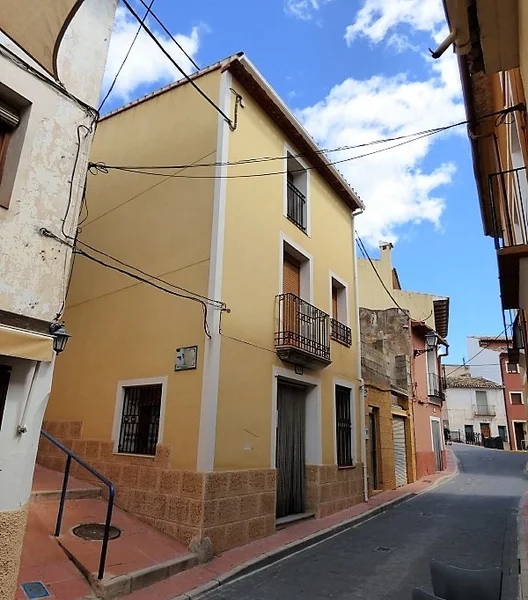
Facade of an official Oficina de Extranjeros building in Spain

Key Procedures for Property Buyers

When buying property, you will encounter several administrative terms managed by this office. It is vital not to confuse them.

1. The NIE (Número de Identificación de Extranjero)

The NIE is a unique, personal, and permanent tax identification number. It does not prove your residence in Spain, but it is mandatory for any economic transaction. You will need it for:

  • Signing the deed of sale (Escritura) at the notary.
  • Opening a Spanish bank account.
  • Paying taxes related to the purchase (ITP or VAT).
  • Registering utility contracts (water, electricity, gas) in your name.

2. NIE vs TIE vs Certificado UE: What you need to know

This is the most common confusion. The NIE is just a number. The TIE and the Certificado UE are physical documents that contain this number and prove your residence status.

Differences between NIE, Certificado UE, and TIE
Document Description Who is it for? Appearance
NIE Unique tax identification number (for non-residents or residents). Anyone (EU and non-EU). Simple white A4 sheet (number assignment).
Certificado de Registro UE Proof of legal residence (if stay > 3 months). EU Citizens (French, Belgians, etc.). Small green paper card (often called the "green NIE").
TIE Physical residence card with photo and fingerprints. Non-EU Citizens (Swiss, British, Americans...). Plastic card (like a driver's license).

Infographic describing the differences between NIE (number), Certificado UE (EU residents), and TIE (non-EU residents) in Spain

How to get an appointment (Cita Previa)?

It is currently impossible to simply walk into the Oficina de Extranjeros. Obtaining an online appointment (Cita Previa) is a mandatory and often complex step, as slots are highly sought after.

Good to know: For simpler procedures, such as applying for a non-resident NIE (form EX-15), it is often quicker to go through an authorized National Police station (Comisaría de Policía). They have their own "Extranjería" counters and a separate appointment system.

The online Cita Previa process

The procedure involves several steps on the government portal:

  1. Access the official Sede Electrónica portal.
  2. Select the province (e.g., "Alicante").
  3. Choose the procedure (e.g., "Policia - Asignación de NIE" for a simple NIE, or "Solicitud de autorizaciones" for residency).
  4. Fill in your personal information (Name, Surname, Passport Number).
  5. Search for and select an available slot (this is often the most difficult step).

Required Documents and Locations

Typical documents to prepare

Each procedure requires specific documents and the payment of a fee ("tasa"). Presenting an incomplete file will result in immediate rejection.

Procedure (Example) Key Documents Required
NIE Application (Non-resident) Completed form EX-15, Paid form Tasa 790-012 at the bank, Passport (or National ID Card) + photocopy, Proof of reason (e.g., property reservation contract).
Certificado de Registro UE Completed form EX-18, Paid form Tasa 790-012, Passport, Proof of financial means and health insurance (e.g., employment contract, sufficient funds).

Where to find an office?

An Oficina de Extranjeros (or an authorized police station) can be found in each provincial capital. In areas with high demand for real estate, the most requested offices are those in:

  • Alicante
  • Valencia
  • Malaga
  • Murcia
  • Barcelona
  • Madrid

Example of a TIE residence card and a green NIE certificate in Spain

Conclusion

The Oficina de Extranjeros is the administrative backbone of a foreigner's life in Spain. For a property project, it is the essential starting point, if only for obtaining the NIE. The complexity of the forms (EX-15, EX-18...), the difficulty in getting an appointment, and the language barrier can quickly become a major obstacle.

This is why an experienced English-speaking real estate agency in Spain, like Voguimmo, integrates these procedures into its support. Engaging professionals who master these procedures ensures you obtain your documents quickly and secures your property purchase project from A to Z.

Expert Voguimmo

Need help with the Oficina de Extranjeros?

Take advantage of market opportunities. Let's discuss your project.

★★★★★
4.9/5 sur 1530 avis

🔒 Free & no commitment. Your data remains confidential.

FAQ: Spanish Foreigners' Office (Oficina de Extranjeros)

Your Essential Guide to Spain's Foreigners' Office

Yes. You can apply for an NIE at the nearest Spanish Consulate in your country of residence. This option often takes longer (several weeks) but saves you the hassle of booking an appointment (Cita Previa) in Spain, which can be challenging.

Once your appointment (Cita Previa) is secured, the process is very quick. If your application is complete (EX-15 form, paid fee, passport), the NIE (the white A4 document) is generally issued immediately at the end of your police station appointment.

No. The NIE number (e.g., Y-1234567-B) is assigned for life; it is permanent. What can expire are the documents that prove your residency and contain this number, such as the TIE card (for non-EU citizens) or the Certificado de Registro UE (which may require an update if it's very old).

The cost is a modest administrative fee ("tasa"). For the simple assignment of the NIE (EX-15 form), the fee (Modelo 790-012) is currently €9.84. For obtaining the Certificado de Registro UE (the "Green NIE") or the TIE, the fee is €12.00.

This is the informal name given to the Certificado de Registro de Ciudadano de la UE. It is a small green paper card that certifies you are an EU citizen legally residing in Spain (for stays longer than 3 months). It does not have an expiry date.

Since Brexit, British citizens are considered third-country nationals. You are no longer entitled to the Certificado de Registro UE ("Green NIE"). If you become a resident in Spain, you must apply for a TIE (Tarjeta de Identidad de Extranjero), which is a physical card with a photo and an expiry date.

Form EX-15 is the "Application for Foreigner's Identification Number (NIE) and Certificates." It is the standard form you use for a non-resident NIE application, meaning if you only need the number for a specific process (like buying a house) without the intention of living in Spain.

Form EX-18 is the "Application for registration in the Central Register of Foreigners (EU Citizen Residence)." This is the form that you, as an EU citizen, must use to apply for your legal residency in Spain (the "Green NIE") if you plan to live there for more than 3 months.

This is a very common problem. Slots are released at specific times (often early morning) and are taken within minutes. Your options are:

  • Persevere: Try logging in every day at different times.

  • Change office: Try a police station in a less busy neighbouring town.

  • Delegate: Authorise a professional (a lawyer, gestor, or your real estate agency) who is experienced in these procedures to handle it for you.

Yes. You can grant a notarised power of attorney (Poder) to a legal representative (a lawyer, gestor, or a trusted third party) for them to submit the application on your behalf. This is a widely used solution for international buyers to avoid having to travel.

It is not mandatory, but highly recommended. Officials are not required to speak English or French. If you do not speak Spanish, it is advisable to be accompanied by a translator or a representative from your real estate agency to avoid any misunderstandings.

Yes. Every person (natural or legal) who appears on the notarised deed of sale (Escritura) must have their own NIE number. If you are buying as a couple, jointly, or via a company, each 'party' must be identified.

No. This is a common confusion.

  • The Oficina de Extranjeros (or Police) manages your foreign identity (NIE, residency).

  • The Ayuntamiento (Town Hall) manages your municipal registration (Empadronamiento), which is your proof of address.

Yes. The number on the sheet is permanent and always valid. The A4 document itself does not expire; it simply certifies that this number has been assigned to you. It is perfectly valid for signing a purchase before the Notary Public.

For the simple signing of the deed of purchase (Escritura), you only need one thing: your NIE number (obtained via form EX-15, usually on the white A4 sheet) and your valid identification document (Passport or National ID Card). You do not need to be a resident (to have the "Green NIE") to own property.

On the same topic:

Our clients talk about us