Spain Property Mortgage Estimator
Precise analysis to secure your purchase and accurately forecast banking costs.
This tool is a vital first step. For a full process overview, read our comprehensive guide on Safe Property Acquisition in Spain.
Mortgage simulation form
Why use this mortgage estimator?
This tool defines the financial framework of your future acquisition on the Costa Blanca. It offers clear visibility on your real budget before you engage lawyers or approach our banking partners.
Understanding Spanish Financing Mechanics
- Financed Amount: Total capital allocated by the bank for your acquisition.
- Interest Rate: Percentage applied (fixed or variable) determining the cost of credit.
- Amortization Period: Repayment timeframe, generally strictly limited for non-residents.
- Borrower Protection: Insurance covering the outstanding capital (optional or mandatory).
Lending Criteria (Preferred Banking Partners)
- Fiscal Income: > €48,000 net / year minimum.
- Loan-to-Value (LTV): Max 70% of property value (Non-Residents).
- Duration: 20 years maximum (ending by age 75 max).
- Debt Ratio: Maximum 40% of your global net income.
Does your situation require specific expertise?
We can submit your file directly to our banking partner's directors for a personalized feasibility study.
Request a Pre-Validation CallWho can get a mortgage in Spain?
Discover 4 typical profiles (personas) to visualize your eligibility via the CaixaBank.
🛡️ The 3 Golden Rules of Financing (Non-Residents)
Income
Min. €48,000 net / year
Deposit (Cash)
Min. 42% of total price
Debt Ratio
Monthly payment < 40% of income
1. Remote Working Couple
ELIGIBLEWhere does the €140k cash come from?
- Inheritance / Gift: Family financial support.
- Property Resale: Capital gains from a previous investment.
- Savings: Prudent saver profile with low outgoings.
This profile assumes your current mortgage in your home country is low (< €1,150/mo) or fully paid off.
New-build pied-à-terre on the Costa Blanca for holidays and hybrid work.
2026 Market Insight: A popular wealth strategy combining hybrid remote working (fiber optics/terrace) and long-term planning.
- Total Couple Income: €5,000 / month (€60,000 / year)
- Age: 40 years old (Duration: 20 years)
- Property: New Apartment in Alicante - €250,000

Financing Plan
- Deposit on property €106,000
- Loan (58% of price) €144,000
- Estimated Payment €858 / month
Non-financed Purchase Costs
- VAT (10%): €25,000
- Stamp Duty AJD (~1.5%): €3,750
- Notary (~0.8%): €2,000
- Land Registry (~0.5%): €1,250
- Legal Fees (Solicitor): €2,500
- Total non-financed fees: €34,500
If this is your situation, you will need approx. €140,500 cash to fund this project.
2. Business Owners (Couple)
ELIGIBLE'Pre-Retirement' Strategy
- Goal: Buy the retirement residence now.
- Why 10 years? The couple wants to clear the debt by age 65 (retirement) to secure their future.
- Cash Source: Dividends, Retained Profits, or equity sale.
With a 43% debt ratio, the household must **own their main residence mortgage-free**.
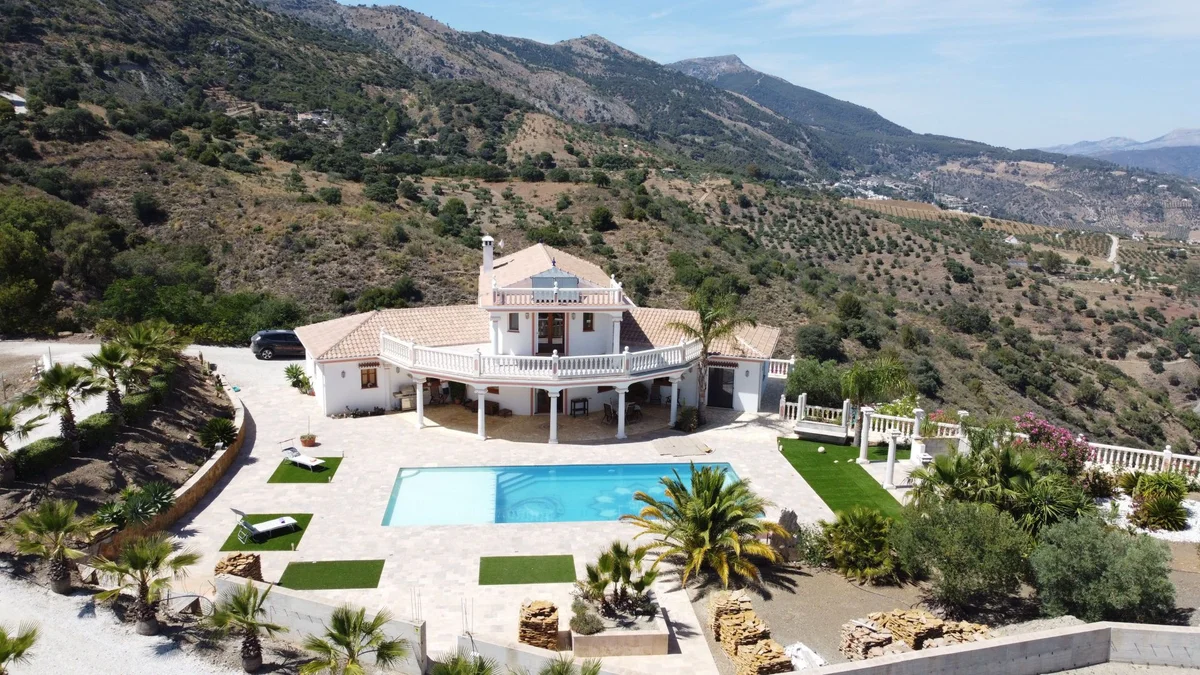
Family villa for retirement with seasonal rental income.
- Total Couple Income: €8,000 / month (€96,000 / year)
- Age: 55 years old (Selected duration: 10 years)
- Property: Villa in Jávea (Resale) - €600,000
Financing Plan
- Deposit on property €252,000
- Loan (58% of price) €348,000
- Estimated Payment €3,490 / month
Non-financed Purchase Costs (Resale)
- Transfer Tax ITP (10%): €60,000
- Technical fees (Notary, Reg, Lawyer): ~€4,400
- Total non-financed fees: €64,400
If this is your situation, you will need €316,400 cash to fund this project.
3. Retired Couple
ELIGIBLE"Lifestyle & Downsizing" Project
- Source of Funds: Downsizing strategy: Selling the large family home to buy smaller in the UK/Ireland + this bungalow in Spain.
- Age Constraint: At 65, the bank requires the loan to be fully settled by age 75.
- Max Duration: 10 years is the maximum term allowed here.
Age is the limiting factor here. A 15-year term would be refused as it ends at age 80.
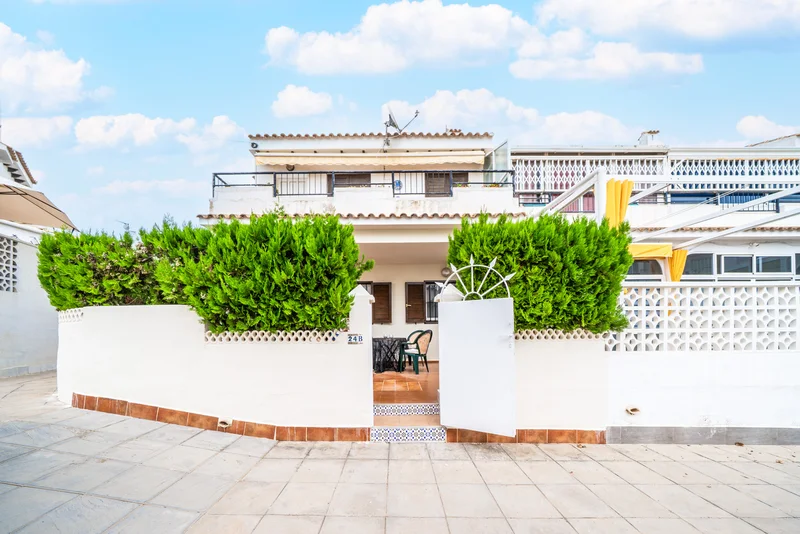
Partial use of capital from selling a property in the UK/Ireland.
- Net Pension Income: €4,200 / month (€50,400 / year)
- Age: 65 years old (Max duration: 10 years)
- Property: Bungalow in Torrevieja (Resale) - €180,000
Financing Plan
- Deposit on property €75,600
- Loan (58% of price) €104,400
- Estimated Payment €1,047 / month
Non-financed Purchase Costs
- Transfer Tax ITP (10%): €18,000
- Technical fees (Notary, Reg, Lawyer): ~€4,140
- Total non-financed fees: €22,140
If this is your situation, you will need €97,740 cash to fund this project.
4. Independent Professional (Solo)
ELIGIBLESelf-Employed (e.g. Medical, IT, Consultant)
- Goal: Asset diversification outside home country (tax efficiency & capital growth).
- Cash Source: Company treasury or significant savings.
- Note: Professional loans are deducted beforehand; €6,000 is net disposable income.
This type of property (City Center €350k) targets short-term rental or capital appreciation.
To invest abroad, the bank requires this profile to already **own their main residence** in their home country.
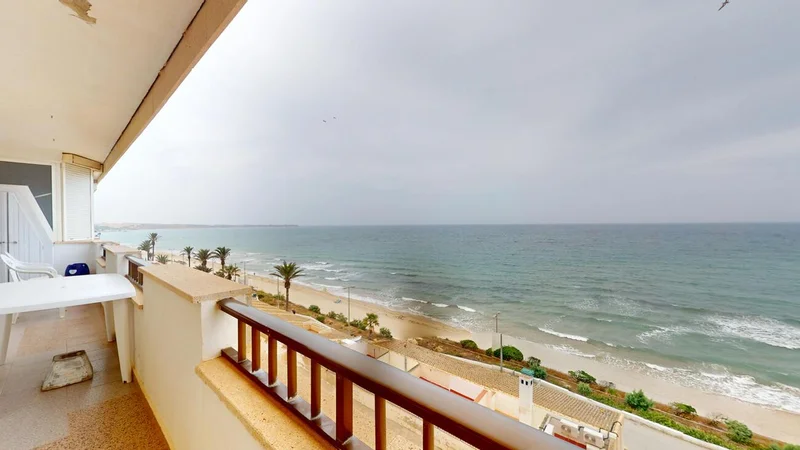
Professional seeking to diversify their rental portfolio in the city center.
- Net Monthly Income: €6,000 / month (€72,000 / year)
- Age: 45 years old (Duration: 20 years)
- Property: 88m² Apt in Pilar de la Horadada (Resale) - €350,000
Financing Plan
- Deposit on property €147,000
- Loan (58% of price) €203,000
- Estimated Payment €1,210 / month
Non-financed Purchase Costs
- Transfer Tax ITP (10%): €35,000
- Technical fees (Notary, Reg, Solicitor): ~€8,050
- Total non-financed fees: €43,050
If this is your situation, you will need €190,050 cash to fund this project.
📊 Comparative Case Summary
| Profile | Income | Property & Condition | Deposit | Total Cash Required | Bank Loan | Monthly Payment |
|---|---|---|---|---|---|---|
| Remote Working Couple | €5,000 / month (€60,000 / year) | New - €250,000 | €106,000 | €140,500 | €144,000 | €858 / month |
| Business Owners (Couple) | €8,000 / month (€96,000 / year) | Villa - €600,000 | €252,000 | €316,400 | €348,000 | €3,490 / month |
| Retired Couple | €4,200 | Bungalow - €180,000 | €75,600 | €97,740 | €104,400 | €1,047 / month |
| Independent Professional (Solo) | €6,000 / month (€72,000 / year) | Apt - €350,000 | €147,000 | €190,050 | €203,000 | €1,210 / month |
Frequently Asked Questions (FAQ): Securing a Spanish Mortgage
Yes, absolutely. Spanish banks are accustomed to financing international buyers. However, conditions differ from those for residents: the required deposit is generally higher as the bank views the risk profile as slightly different.
For non-fiscal residents, banks typically finance between 60% and 70% of the property value (excluding purchase costs). This means you need a deposit covering the remaining 30-40%, plus taxes and fees (approx. 10-12%).
It is often simpler in Spain. Most UK or international banks require a mortgage guarantee on a property located in your home country (releasing equity). A Spanish bank, however, will take the mortgage directly on the property you are purchasing in Spain.
The Tasación is the official property valuation, carried out by an independent valuer appointed by the bank. It is mandatory. The bank will finance the lower amount between the actual purchase price and the Tasación value. If the valuation comes in low, you will need to increase your deposit.
There are three main types: Fixed Rate (Tipo Fijo), currently very popular for peace of mind; Variable Rate (usually Euribor + a margin), higher risk but often cheaper initially; and Mixed Rate (fixed for the first few years, then variable). The choice depends on the economic climate.
Spanish banks are strict: your total monthly debt repayments (including the Spanish mortgage + any existing loans at home) must generally not exceed 30% to 35% of your net income. They will analyze your payslips, tax returns, and bank statements.
For the initial feasibility study, no. But for the issuance of the final binding offer and signing at the Notary, the NIE (Foreigner Identification Number) is mandatory. This is the first administrative step you should take.
Yes. Generally, banks require the mortgage to be fully repaid before the borrower reaches 75 years old (sometimes 70 or 80 depending on the lender). This impacts the maximum term of the loan if you are over 50 or 60.
The process can be slower than in the UK or US. Allow approximately 4 to 8 weeks between submitting a complete file and signing at the Notary. It is crucial to plan ahead to ensure the property transaction proceeds smoothly.
Yes, it is mandatory for the bank to collect mortgage payments. This account will also be used to pay for utilities (water, electricity, local taxes). Some banks offer specific accounts for non-residents.
Expect to pay for the Tasación (€300-€500) and sometimes an opening fee (0% to 1% of the loan amount). Since the new mortgage law of 2019, the bank pays the majority of the notary and registry fees related to the mortgage deed itself.
It is a discount on the interest rate granted if you subscribe to the bank's ancillary products: home insurance, life insurance, alarm system, or direct deposit of income. Be sure to calculate if the cost of the insurance outweighs the savings on the rate.
Yes. Spanish law strictly limits early repayment penalties. They are very low (often 0.15% or 0.25% in the first few years, and 0% thereafter). This is a major advantage compared to other banking systems.
Not always. Many Spanish banks in tourist areas (Costa Blanca, Costa del Sol) have English-speaking staff and accept documents (payslips, tax returns) in English. However, a sworn translation may be required for certain official legal documents.
Often, yes. A broker knows which banks are currently lending to non-residents. They can negotiate better rates (often inaccessible to individuals directly) and, most importantly, they handle the administrative burden for you, providing peace of mind for your purchase.
Our clients talk about us
Reviews from Peter Z.
"Investor for rent, Murcia"
Satisfied with my investment. Greg top. Duplex flat is good for renting, good return. Service team professional, helps a lot despite my French not perfect. Would recommend.
Reviews from Loïc S.

A delighted investor in Dénia
Reviews from Roxane R.
"Investor in Alicante"
We spoke by phone about a possible future collaboration, and my first impression is very positive. They are serious professionals, full of ideas, which inspires confidence and makes you want to work with them.
Reviews from Inès L.
"Happy buyer, Antequera region"
I'm a delighted buyer in Antequera! Thanks to the agency's professionalism and their invaluable advice, my purchase went off without a hitch. The beauty of the region and the quality of the support provided more than merit my 5/5 rating.
Reviews from Julien G.
"Satisfied buyer, Albarracín region"
As Belgians, we are delighted buyers in the magnificent Albarracín region. Grégory's guidance was exceptional. His in-depth knowledge of the region and its leisure activities, including the golf courses, was a real asset in confirming our choice.
Reviews from Maxence G.
Satisfied buyer, Jávea region
Reviews from Fabien D.
"Retired expatriate in Segovia"
For our retirement project in Segovia, Grégory's guidance was simply perfect. As a keen golfer, he immediately understood our expectations and found us the rare gem just a stone's throw from a magnificent course. Many thanks for his attentiveness and professionalism!
Reviews from Sarah D.
Retired expatriate in Baza
Reviews from Lydia R.
Top!!!
Reviews from Sébastien G.
Owner of a superb flat in Olvera.
Reviews from Mathis R.
Happy owner at Oropesa del Mar
Reviews from Constance B.
Retired expatriate in Baza
Reviews from Gilles B.
Owner of a superb flat in Formentera.
Reviews from Lucie G.
"A delighted investor in La Coruña"
As an investor, I'm absolutely delighted with my project in La Coruña. I was impressed by the quality of the advice and the in-depth knowledge of the local market. The process was extremely smooth and carried out with exemplary professionalism, which is very reassuring for an investment.
Reviews from Jules-Antoine B.
"A delighted investor in Sitges"
As a Belgian investor, I'm delighted with my project in Sitges. The agency's in-depth knowledge of the local market was a major asset in identifying the right investment. The whole process was carried out with great professionalism and efficiency, and I highly recommend it.
Reviews from Quentin P.
Owner of a superb flat in Seville.
Reviews from Édith R.
Owner of a villa in Benalmádena.
Reviews from Christelle W.
"Dentist in Lyon"
Prestigious properties for sale at unbeatable prices in a heavenly setting. French real estate professionals in Spain offering you a fully immersive visit to one of Spain's most beautiful regions. I can't recommend it enough!
Reviews from Emma B.
"Retired expatriate in Vejer de la Frontera"
As a retired expatriate in Vejer de la Frontera, I was delighted with Loreta's support. Her expertise in administrative and legal services gave me invaluable peace of mind. Everything was handled with professionalism and warmth, thank you Loreta!
Reviews from Françoise D.
"Buyer, Guardamar del Segura"
I was very apprehensive at the start of the project, but the young lady was able to reassure me and understood my needs perfectly. The purchase was stress-free.
Reviews from Aurore L.
Happy buyer, Huéscar region
Reviews from Clovis B.
"Satisfied buyer, Carchuna region"
We're delighted buyers at Carchuna! Grégory's support was remarkable. In addition to his great professionalism, his knowledge of local golf courses was a real plus for us. We're delighted to have found the ideal property in which to enjoy our two passions.
Reviews from Jérémy G.
Owner of a villa in Villafranca del Cid.
Reviews from Jean-Pierre L.
"Owner of a villa, Costa Blanca"
Thanks to their help, I found my villa by the sea. Grégory is very friendly and always available.
Reviews from Yohan C.
"Retired expatriate in Grazalema"
Jérôme gave us excellent advice on our retirement project in Grazalema. His expertise in the upmarket market and his mastery of the financial aspects were a real asset in securing our investment. We're delighted to be starting this new life with complete peace of mind.
Reviews from Inès B.
Owner of a superb flat in Orihuela.
Reviews from Valérie V.
"Happy owner in Malaga"
We're finally homeowners in Malaga and we couldn't have hoped for better support. Jérôme's financial expertise and knowledge of the upmarket market enabled us to make our investment with complete peace of mind. Many thanks to him for his professionalism and invaluable advice.
Reviews from Cassandra R.
Owner of a superb flat in Ripoll.
Reviews from Anaëlle N.
Owner of a villa in Archidona.
Reviews from Marie D.
"Happy homeowner in Alicante"
Very happy, an impeccable experience! Grégory was attentive and very professional from start to finish. I would highly recommend him.
Reviews from Ana G.
"Owner of a villa in Castellar de la Frontera."
thank you
Reviews from Lola D.
"Happy owner in Huéscar"
We're finally homeowners in Huéscar and the experience has been perfect. Jérôme's support was essential; his financial expertise enabled us to secure our project with complete confidence and peace of mind. His professionalism and knowledge of the upmarket market are invaluable assets.
Reviews from Sandrine B.
"A delighted investor in Marchena"
As an investor, I am absolutely delighted with my project in Marchena. Grégory's support was exceptional; his knowledge of the region's assets, including the magnificent golf courses, was a real plus for my investment. His professionalism and sound advice are invaluable.
Reviews from Julia P.
"Owner, Santa Pola"
My husband and I are extremely satisfied with the service. We were able to buy our Atico in record time! Many thanks to Jérôme
Reviews from Charlotte C.
"Happy buyer, Cartagena region"
As Belgians, we are delighted buyers in the magnificent Cartagena region. For this first project in Spain, we particularly appreciated the quality of the agency's advice and professionalism. The process was smooth and reassuring from start to finish - a real pleasure!
Reviews from Marie L.
A delighted investor in Barcelona
Reviews from Marion R.
"Owner of a villa in Sayalonga."
We finally own our villa in Sayalonga! A huge thank you to Loreta, whose expertise was invaluable. Her rigorous management of all the administrative and legal aspects enabled us to complete our project with complete peace of mind. It's a real pleasure to have been so well looked after.
Reviews from Myriam M.
"Retired Belgian expatriate, Benidorm"
During my first visit, I had very precise expectations, but I realised that I hadn't communicated my criteria properly. After clarification, Freddy was able to better target my wishes and guide me effectively.
Reviews from Anouk D.
Owner of a superb flat in Torrox.
Reviews from Jérémy B.
Owner of a superb flat in Cadaqués.
Reviews from David G.
Owner of a villa in Santa Pola.
Reviews from Marjorie L.
We have just met Gregory and his agency and what a welcome he gave to our choice of location. We've just started working together and I'd like to thank him warmly. I have no doubt that he will find us our home. Marjorie
Reviews from Isidore F.
Retired expatriate in Estepa
Reviews from Fanny V.
Happy buyer, Albarracín region
Reviews from Bastien G.
Satisfied buyer, Santiago de Compostela region
Reviews from Hélène R.
Retired expatriate in Salamanca
Reviews from Constance G.
Owner of a villa in Benidorm.
Reviews from Zerouki Z.
A serious and responsive team. Thank you for your availability and your personalised advice. I highly recommend you, especially for those looking for a property in Alicante. I wish you all the best!
Reviews from Aurore B.
Owner of a villa in San Fernando.
Reviews from Sébastien D.
"Owner of a villa in Ibiza."
I'm a DJ and it's really a dream come true thanks to Jérome... thank you my Bro