Affordable Coastal Homes Abroad: Where to Buy?

Introduction
Spain is now one of Europe's most attractive destinations for real estate investment, even if prices per square meter continue to rise annually. Thanks to its sunny climate, lifestyle, modern infrastructure, and still accessible market, more and more foreigners are choosing to buy a primary residence, second home, or rental property on the Spanish coasts.
This decision represents a major financial and personal undertaking. As experts in the Spanish market, we analyze the best opportunities for you to find a home near the sea at a fair price.
Why Invest in the Spanish Coast?
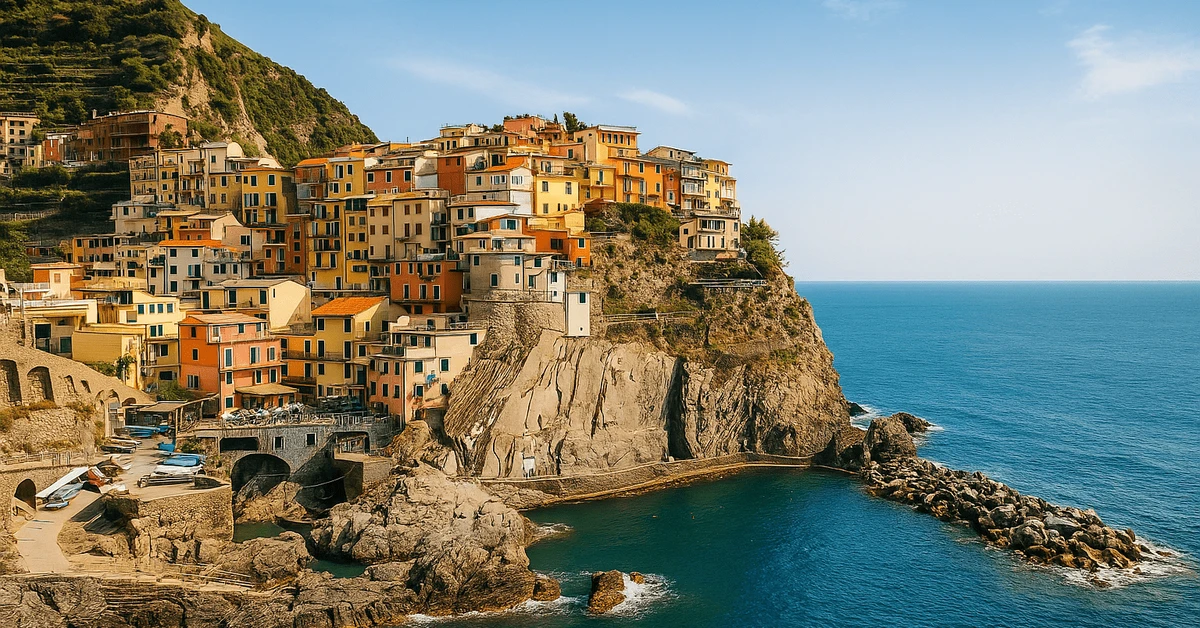
The Spanish coastlines offer an exceptional quality of life, combining idyllic landscapes, fine sandy beaches, Mediterranean gastronomy, and a reasonable cost of living. Moreover, property prices, though rising, remain significantly lower than those in France, Germany, or the United Kingdom.
Coastal regions attract retirees, young families, and investors seeking rental yields alike. With a gross rental yield that sometimes exceeds 6% in certain seaside towns, Spain remains a safe bet.
Coastal City Comparison: France vs. Spain
A quick look at prices per square meter shows why Spain is so attractive for a seaside purchase.
| Criterion | Nice (France) | Biarritz (France) | Alicante (Spain) | Valencia (Spain) |
|---|---|---|---|---|
| Average price per m² | €5,130 | €6,200 | €2,100 | €2,217 |
| Annual Sunshine Hours | 2,724 h | 1,835 h | 3,000 h | 2,660 h |
| Average Temperature | 17 °C | 14 °C | 18.5 °C | 18 °C |
| Number of Beaches | 15 | 6 | 10 | 19 |
| Airport Accessibility | International Airport (Nice Côte d’Azur) | Biarritz Pays Basque Airport | Alicante International Airport | Valencia Airport |
Cost of Living Comparison in Europe (2019-2024)
| Year | France (base 100) | Spain | Germany |
|---|---|---|---|
| 2019 | 100 | 82 | 97 |
| 2020 | 102 | 83 | 98 |
| 2021 | 104 | 85 | 100 |
| 2022 | 108 | 88 | 104 |
| 2023 | 110 | 91 | 106 |
| 2024 | 113 | 93 | 109 |
| Note: Index based on the average cost of housing, food, transport, healthcare, and leisure. Base 100 = France in 2019. | |||
Where to Buy? Analysis of the Spanish Coasts
The Costa Blanca: The Pearl of the East
Located in the province of Alicante, the Costa Blanca is one of the most popular destinations for property purchase in Spain. Cities like Alicante, Torrevieja, Guardamar del Segura, and Jávea attract buyers with their accessibility, gentle lifestyle, and affordable properties.
In Guardamar, for example, a modern apartment for sale 500 meters from the beach can cost between €150,000 and €250,000, a very competitive price. Moreover, the proximity of Alicante airport facilitates seasonal rentals.
The Costa del Sol: Luxury and Andalusian Tradition
The Costa del Sol, in southern Spain, includes emblematic cities such as Marbella, Málaga, Estepona, and Benalmádena. This region is synonymous with sun, golf, and high-end properties.
Prices here are higher, but the offer is very varied: renovated studios with sea views, luxury villas, secure residences. This segment attracts a high-end international clientele, with properties often purchased for resale or premium tourist rentals.
The Costa Brava: Mediterranean Charm a Stone's Throw from France
Located in northeastern Spain, the Costa Brava is particularly sought after for its wild coves, typical villages like Cadaqués or L’Escala, and its proximity to the French border.
Properties here are slightly more expensive than elsewhere, but the locations are often exceptional. Ideal for second homes or for those who wish to live year-round in a peaceful, natural setting.
The Costa Cálida and Murcia: The Smart Property Choice
Still relatively unknown, the Costa Cálida, in the region of Murcia, offers excellent value for money. The city of Cartagena, the seaside resort of La Manga del Mar Menor, or the area of San Pedro del Pinatar feature new developments starting from €100,000.
Less touristy, the region attracts clients looking for tranquility, immense beaches, and great deals. It is also an ideal area for seasonal rental investment.
Tax Advantages for Foreigners
Spain has implemented several incentive schemes to attract foreign investors. As a non-resident, you can freely purchase a property, rent your property, and benefit from stable taxation. The Spanish tax regime provides for:
- Taxation on rental income at 19% (EU residents),
- No property tax (abolished),
- Reduced notary and registration fees compared to France,
- The possibility of obtaining a Golden Visa for any purchase over €500,000.
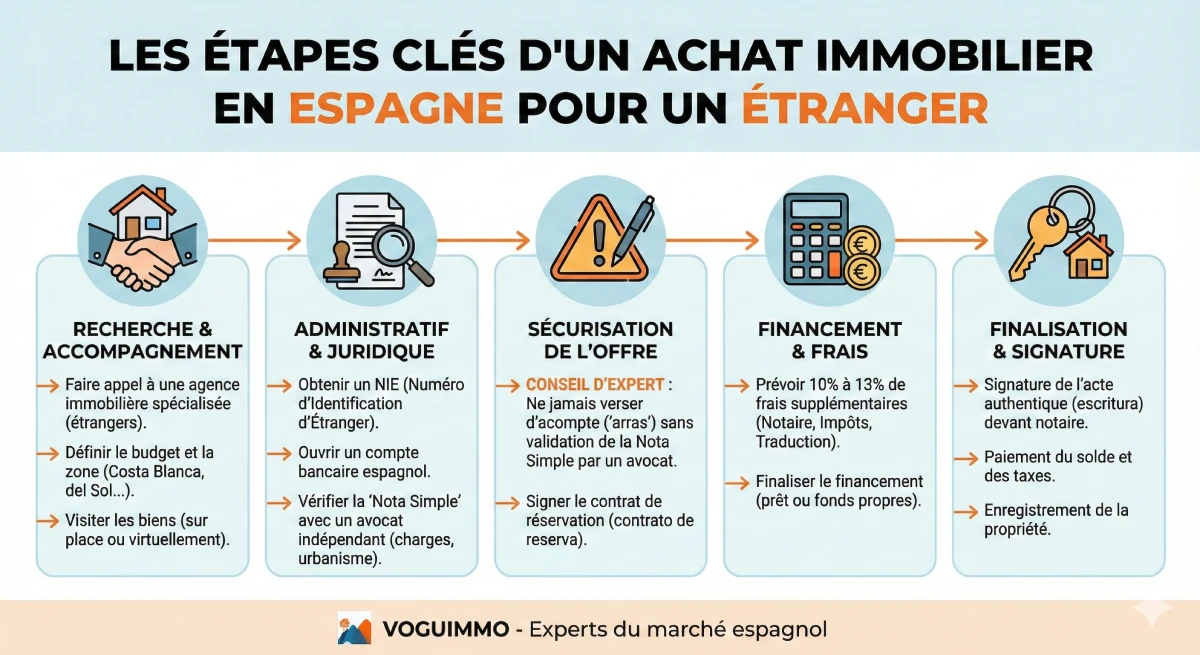
Tips Before Buying a Coastal Property
Before finalizing your property purchase in Spain, here are some recommendations:
- Engage a real estate agency specializing in assisting foreign buyers.
- Verify the property's legal status (liens, urban planning, co-ownership) via the "Nota Simple".
- Obtain a NIE (Foreigner's Identification Number), mandatory for any purchase.
- Budget for an additional 10% to 13% in extra costs (notary, taxes, translation).
- Visit properties in person if possible, or request a comprehensive virtual tour.
Expert Tip: Never pay a deposit ("arras") without having obtained the Nota Simple and had it validated by an independent lawyer (abogado). This is the most critical step to secure your transaction.
Conclusion: Spain, a Promising Destination for Coastal Real Estate
Whether for living, investing, or renting, real estate on the Spanish coasts remains a strategic choice. From the Costa Blanca to the Costa Brava, including the Costa del Sol or the Costa Cálida, each region offers varied opportunities depending on your needs and budget.
With proper support, a study of the local market, and a long-term vision, investing in property in Spain allows you to build assets in a stable, attractive, and sunny country. Don't wait any longer to discover the best property offers in Spain and turn your dream of seaside living into a reality!

Your Spanish Coastal Property Project?
Take advantage of market opportunities. Let's discuss your project.
Table of Contents
- Introduction
- Why Invest in the Spanish Coast?
- Coastal City Comparison: France vs. Spain
- Cost of Living Comparison in Europe (2019-2024)
- Where to Buy? Analysis of the Spanish Coasts
- The Costa Blanca: The Pearl of the East
- The Costa del Sol: Luxury and Andalusian Tradition
- The Costa Brava: Mediterranean Charm a Stone's Throw from France
- The Costa Cálida and Murcia: The Smart Property Choice
- Tax Advantages for Foreigners
- Tips Before Buying a Coastal Property
- Conclusion: Spain, a Promising Destination for Coastal Real Estate
FAQ: Buying Affordable Coastal Property in Spain
Your Expert Guide to Securing Great Value Coastal Homes in Spain
Spain stands out as one of Europe's most sought-after and affordable destinations. It offers a perfect balance of sunny climate, high quality of life, and a real estate market with significantly lower prices than in many other European countries, especially for properties located on its vast Mediterranean coasts.
Yes, this is entirely achievable. For this budget, it's advisable to focus on regions such as Murcia (Costa Cálida) or certain areas of Andalusia (Almería or Cádiz provinces). These will often be apartments with one or two bedrooms, or small traditional village houses, sometimes a few minutes from the beach, offering excellent value for money.
Buying a habitable house directly on the seafront for 50,000 or 60,000 euros is very difficult. However, this budget can provide access to properties requiring renovation, studios, or small houses located slightly further inland. Bank repossessions ("embargos") can also occasionally present opportunities in this price range.
To find the most competitive prices for coastal properties, the Costa Cálida (Murcia region) is often cited as the best 'value pick'. The Costa de Almería and certain parts of the Costa del Azahar (Castellón province) also offer very attractive property prices, away from the hustle and bustle and higher costs of more touristy areas.
Absolutely. There are no restrictions for a UK/US citizen or any international buyer wishing to purchase property in Spain. The main administrative step is obtaining an NIE (Foreigner Identification Number), which is essential for any transaction.
The primary advantages are economic: the price per square meter is, on average, 30% to 50% lower than in the UK or US, the cost of living is lower, and property taxation is often more lenient (Property Tax - IBI - is generally moderate, and there isn't an equivalent to taxes like the former 'Taxe d'Habitation' found in some other European countries).
The first crucial step is obtaining your NIE. Next, it is recommended to open a Spanish bank account. The process continues with the signing of a reservation contract ('contrato de arras'), followed by the final deed of sale ('escritura pública') before a Spanish Notary, who plays a vital role similar to a solicitor/attorney in property conveyancing.
You should budget an additional 10% to 15% of the property's purchase price. This amount covers Property Transfer Tax (ITP) for a resale property (between 4% and 13% depending on the region) or VAT (IVA at 10%) for a new build, as well as notary fees, Land Registry registration fees, and solicitor's fees if you use one.
Yes, Spanish banks grant mortgages to non-residents. Generally, they finance up to 60-70% of the property's purchase price (the lower amount between the sale price and the bank's valuation). A personal deposit of at least 30% to 40% is therefore necessary to cover the remaining price and associated costs.
Rental yields are very attractive, especially for short-term holiday rentals. In tourist areas, gross yields can easily reach 5% to 7% per year, or even more. However, it is crucial to study the attractiveness of the area during both high and low seasons.
The most popular and comprehensive property portals for searching properties in Spain are Voguimmo, Idealista, Fotocasa, and Pisos.com. For an international clientele, the Kyero website is also an excellent resource.
Beware of offers that seem too good to be true. It is crucial never to transfer any money without having signed a reservation contract. It is also essential to have the legal status of the property (debts, urbanistic compliance) verified by a professional (solicitor or 'gestor') before committing to a purchase.
Yes, the NIE is absolutely mandatory. You can apply for it at the Spanish consulate in your home country (e.g., the UK or US) before your trip, or directly in Spain at an authorized police station. A solicitor ('abogado') or advisor ('asesor') can also handle this process for you via a power of attorney.
Yes, the cost of living in Spain is, on average, 20% to 30% cheaper than in the UK or US. This difference is particularly noticeable in spending categories such as food (market shopping, restaurants), leisure, and local transport.
The property market on the Spanish coasts is very dynamic and attracts a constant international clientele. A well-located property, priced correctly for the market, and in good condition, generally resells well. Demand for properties with sea views or easy access to the beach remains particularly strong.
You might be interested in ...