
Discover Alicante's Best Beaches for Your Spanish Holiday

Introduction
The province of Alicante, with its exceptional climate and miles of coastline, is a dream destination. Whether you are a future expatriate, a retiree seeking sunshine, or an investor, the quality of its beaches is a major decision criterion. Choosing where to live is a significant decision that impacts your quality of life and finances.
As experts in the local real estate market, we offer a comprehensive guide to the most beautiful beaches and coves of the Costa Blanca. From the expansive family-friendly beaches of San Juan to the secret coves of Xàbia, discover where to lay your towel... or settle your life.
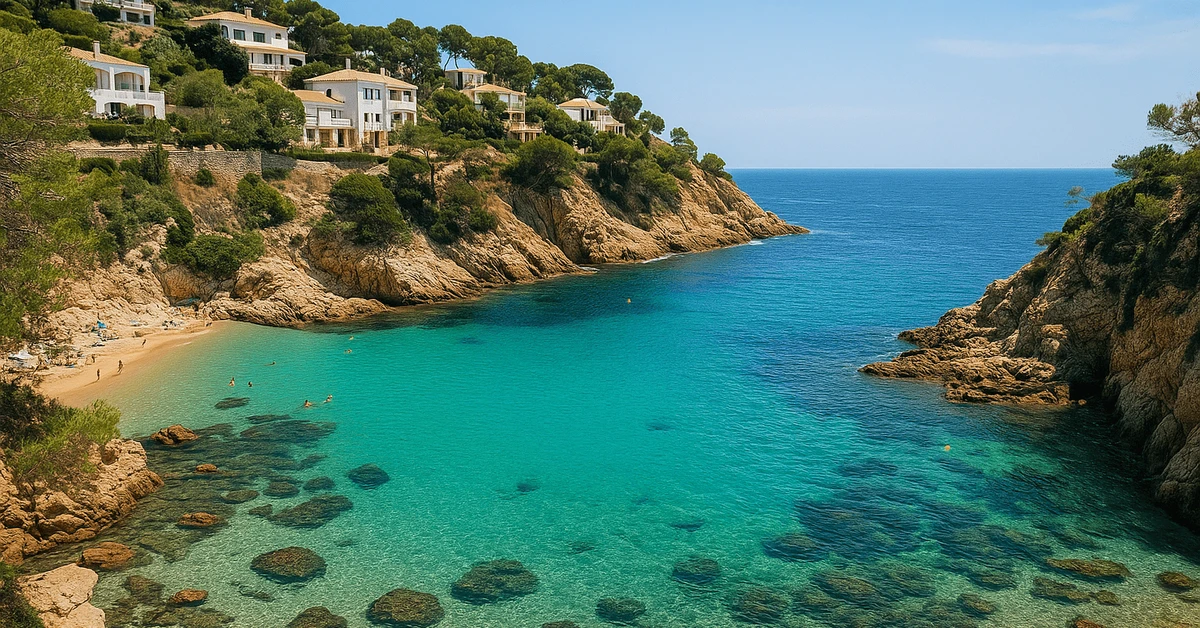
Alicante's Must-Visit Beaches
The Costa Blanca is brimming with magnificent beaches, many of which are awarded the prestigious Blue Flag for their exceptional water quality and services. Here is a selection of the most renowned, perfect for a first discovery.
| Beach | City | Description | Access Notes |
|---|---|---|---|
| Playa de San Juan | Alicante | Urban beach, 7 km long, ideal for families and water sports enthusiasts. | Accessible by tram (L3, L4), numerous services. |
| Playa del Postiguet | Alicante | Iconic beach right in the city center, perfect for a quick dip after sightseeing. | Accessible on foot from the historic center. |
| Playa de la Granadella | Xàbia (Jávea) | Small pebble cove surrounded by cliffs, voted several times "most beautiful beach in Spain". | Accessible by car, limited parking in high season. |
| Playa de Levante | Benidorm | Lively beach with many bars and restaurants, very popular with visitors. | Accessible on foot from Benidorm city center. |
| Playa de la Fossa | Calp (Calpe) | Fine sand beach with views of the Ifach rock, ideal for families. | Accessible by car, numerous services. |
| Playa del Portet | Moraira | Small, shell-shaped fine sand beach, with turquoise waters. Very upscale. | Accessible by car, restaurants nearby. |
| Playa de Albir | L'Alfàs del Pi | Pebble beach with a beautiful promenade (Paseo de las Estrellas), perfect for strolls. | Accessible by tram (L9), numerous services. |
| Cala del Moraig | Benitatxell | Spectacular cove with turquoise waters, famous for its underwater cave (Cova dels Arcs). | Accessible by car (paid parking) then a walk down. |
| Cala del Tio Ximo | Benidorm | Small nudist cove surrounded by cliffs, offering greater tranquility. | Accessible on foot from Levante Beach. |
| Playa Muchavista | El Campello | Natural extension of San Juan. Expansive, fine sand, perfect for families. | Accessible by tram (L3), numerous services. |
Beyond the Beach Towel: Activities and Secret Coves
The Alicante coast isn't just for sunbathing. It offers a multitude of activities and hides treasures for those seeking tranquility.
Activities and Leisure on Alicante's Beaches
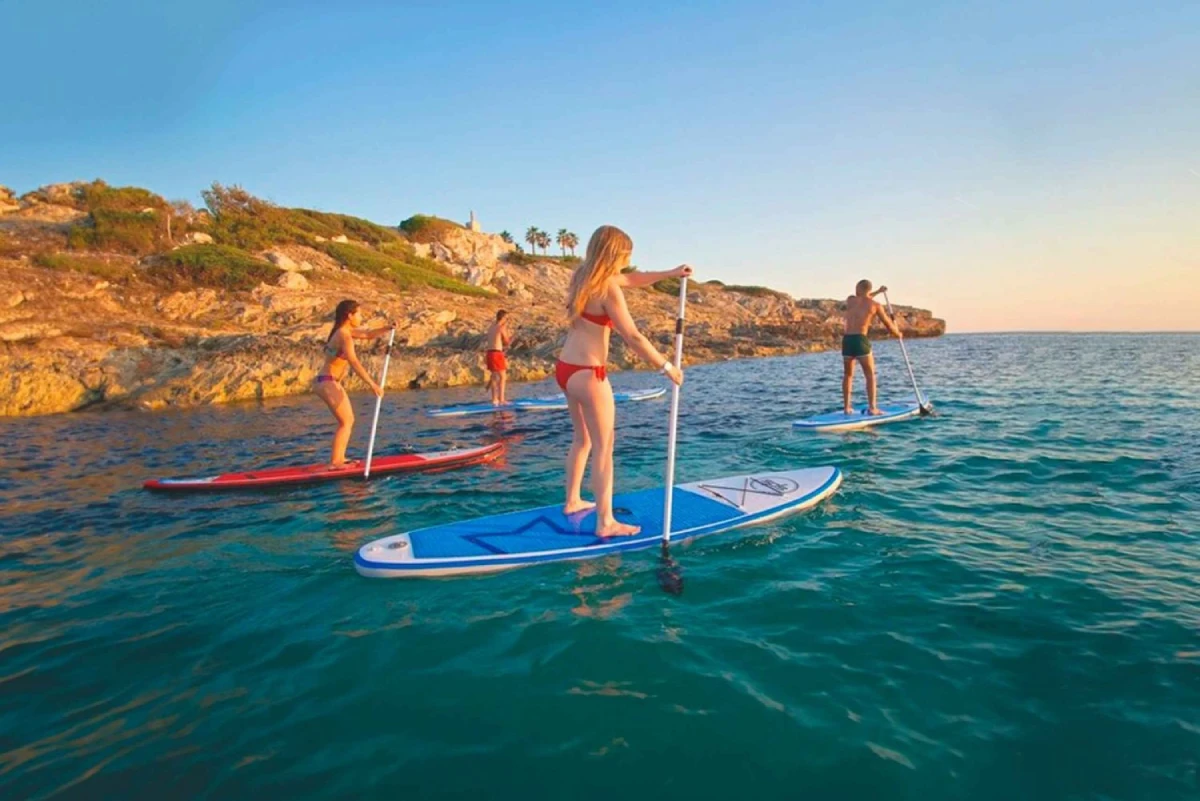
- Water sports: Paddleboarding (SUP), kayaking (especially in Dénia and Xàbia), sailing, and jet skiing.
- Walks and cycling paths along the coast (e.g., El Campello, Albir).
- Restaurants and "chiringuitos" (beach bars) to savor local cuisine by the sea.
Secluded Coves for a Peaceful Beach Experience in Alicante
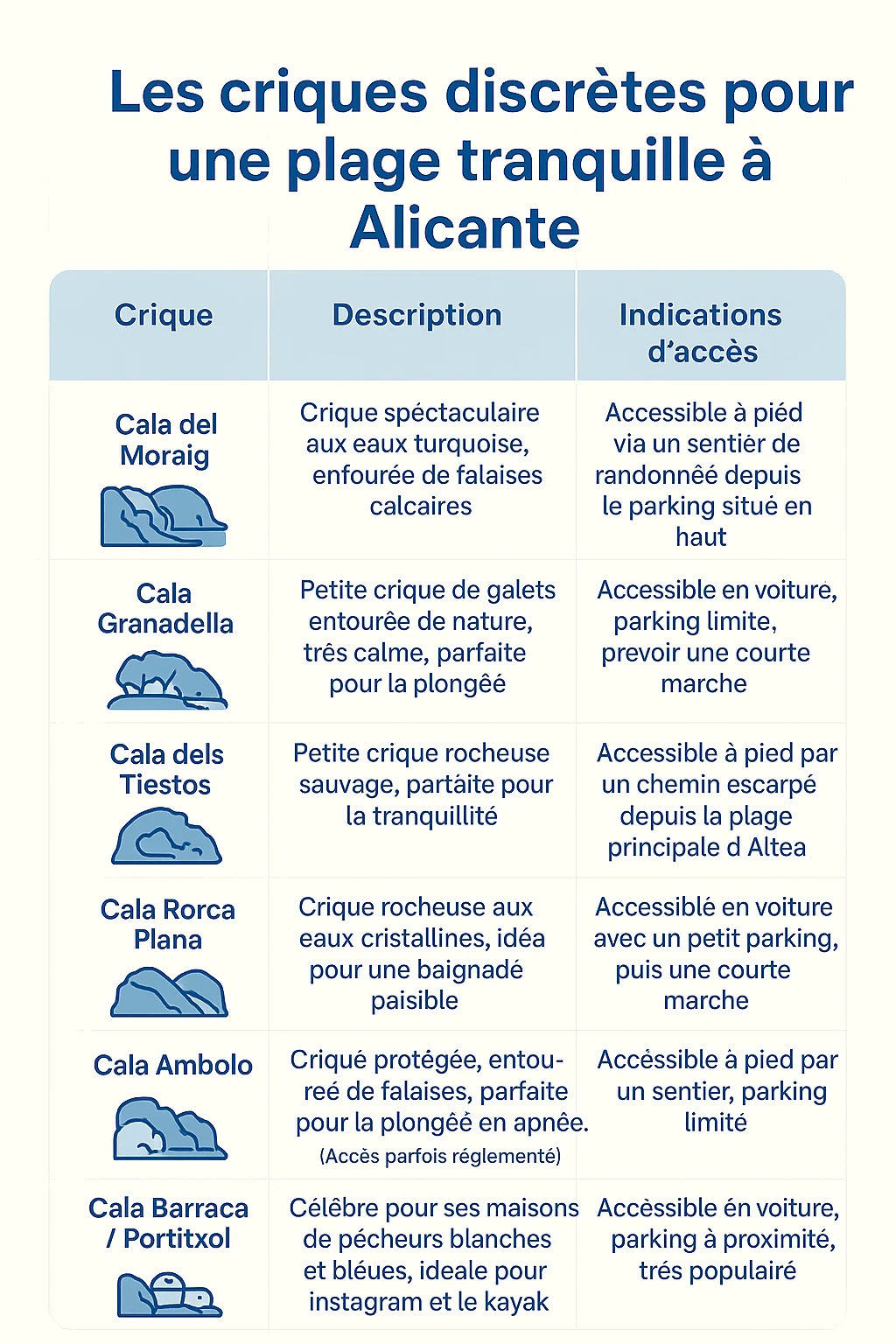
Tired of the crowds? The province boasts numerous "calas" (coves), often pebble-lined, offering intimate settings and crystalline waters ideal for snorkeling.
| Cove | City | Description | Access Notes |
|---|---|---|---|
| Cala del Moraig | Benitatxell | Spectacular cove with turquoise waters, surrounded by limestone cliffs. | Accessible on foot via a hiking trail from the parking lot at the top. |
| Cala Granadella | Jávea (Xàbia) | Small pebble cove surrounded by nature, very quiet, perfect for diving. | Accessible by car, limited parking, expect a short walk. |
| Cala dels Tiestos | Altea | Small wild rocky cove, perfect for tranquility. | Accessible on foot via a steep path from Altea's main beach. |
| Cala la Roca Plana | Calpe | Rocky cove with crystal-clear waters, ideal for a peaceful swim. | Accessible by car with a small parking area, followed by a short walk. |
| Cala Ambolo | Jávea (Xàbia) | Protected cove, surrounded by cliffs, perfect for snorkeling. (Access sometimes regulated). | Accessible on foot via a path, limited parking. |
| Cala Barraca / Portitxol | Jávea (Xàbia) | Famous for its white and blue fishermen's houses, ideal for photography and kayaking. | Accessible by car, parking nearby, very popular. |
Expert Tips for Enjoying Alicante's Beaches
Best Times to Visit, Access, and Services
As experts residing on the Costa Blanca, here are our practical tips for a successful experience :
- Best times to visit: To avoid crowds, favor the months of May, June, and September. The climate is perfect, and the beaches are much quieter.
- Access and parking: In July and August, parking near popular coves (Granadella, Moraig) is very challenging. Arrive before 9 AM or use the shuttle services (buses) provided by local municipalities.
- Services: Most major beaches (San Juan, Postiguet, Levante) are supervised (socorristas) and equipped with showers, toilets, and sunbed/umbrella rentals (hamacas) from April to October.
Water Quality and Environmental Labels
The province of Alicante is proud of its commitment to the environment. Each year, it receives dozens of Blue Flags (Bandera Azul). This international label guarantees not only excellent water quality but also safety services, good environmental management, and accessibility.
Expert tip: If you are purchasing a property for rental, proximity to a Blue Flag beach is a major commercial and trust advantage for attracting discerning visitors.
Conclusion
The province of Alicante offers an exceptional diversity of beaches, capable of satisfying all tastes. Whether you are looking for the lively atmosphere of an urban beach or the tranquility of a wild cove, the Costa Blanca has a treasure to offer you.
Enjoying these beaches a few weeks a year is a treat. Living there year-round is a true privilege. If you dream of transforming this holiday scenery into your everyday life, the next step is to find your ideal property.
Article Summary
- Introduction
- Alicante's Must-Visit Beaches
- Beyond the Beach Towel: Activities and Secret Coves
- Activities and Leisure on Alicante's Beaches
- Secluded Coves for a Peaceful Beach Experience in Alicante
- Expert Tips for Enjoying Alicante's Beaches
- Best Times to Visit, Access, and Services
- Water Quality and Environmental Labels
- Conclusion
FAQ: Alicante Beaches (Province & City)
All the answers to your questions about Alicante's beaches
Without a doubt, Playa de San Juan. It's an immense, very clean fine sandy beach, 7 km long, bordered by a promenade with restaurants and bars. It's perfect for families and year-round living. Playa del Postiguet is the other option, located right in the city centre at the foot of the castle.
Cala de la Granadella in Jávea (Xàbia) is often voted "Spain's most beautiful beach." It's a pebble cove with spectacular turquoise waters, nestled between wooded cliffs. It's a paradise for diving (snorkeling).
The North Costa Blanca (Jávea, Altea, Moraira) is known for its magnificent coves, but these are often pebble beaches. To find long stretches of fine sand, opt for the south of the province: Guardamar del Segura (famous for its dunes) and Torrevieja (Playa de La Mata) are excellent choices.
Playa de la Fossa in Calpe (Calp) is ideal: fine sand, calm and shallow waters, stunning views of the Peñón de Ifach, and numerous play areas. Playa Muchavista in El Campello is also perfect, being vast and easily accessible by tram.
The area between Jávea and Benitatxell is a paradise for coves. Look for Cala del Moraig (with its famous Cova dels Arcs cave) or Cala Ambolo (historically nudist, access sometimes regulated). These small coves offer crystal-clear waters perfect for snorkeling.
This is the most challenging aspect. For large urban beaches (San Juan), it is highly recommended to use the Tram. For popular coves (Granadella, Moraig), it's almost impossible after 10 am. You need to arrive very early (before 9 am) or use the shuttle services (buses) set up by local councils during peak season.
Playa de Levante in Benidorm is world-renowned for its lively atmosphere, day and night. For a more "lounge" and chic vibe, the chiringuitos on Playa de San Juan (Alicante) or Playa del Albir are very popular in the evenings.
During peak season (June to September), dogs are prohibited on almost all tourist beaches. However, the province has developed several "Dog-Friendly" (playas caninas) beaches. The best known are Agua Amarga (Alicante city) and Punta del Riu Sec (El Campello).
Alicante province is the most awarded province in Spain for Blue Flags. This is an international label that guarantees excellent water quality, beach cleanliness, safety (lifeguards), and accessibility of services (showers, toilets).
Avoid large sandy beaches. The best spots are rocky coves and pebble beaches. Las Rotas in Dénia, Cala Granadella in Jávea, and the coves of Benissa (such as La Fustera) are protected marine reserves, ideal for observing underwater flora and fauna.
For photos, two places stand out: Cala Barraca (or Portitxol) in Jávea, with its iconic fishermen's houses with blue doors, and the breathtaking view from the top of Cala del Moraig in Benitatxell.
Yes, there are several dedicated coves. Cala del Tio Ximo in Benidorm (near Levante) is very well-known, as are Cala Ambolo in Jávea (though access is sometimes restricted) and Playa de la Solsida in Altea.
You need to get away from the major centres. Try the wild beaches of Guardamar del Segura (Playa de La Roqueta or Los Tusales), which are so vast that you'll always find space. The less accessible pebble beaches of Altea (outside the town centre) are also an excellent option for tranquility.
To avoid the crowds in July and August, the months of May, June, and September are perfect. The climate is ideal (25-28°C), the sea is already warm, and the beaches are much quieter. This is the period preferred by local residents.
It depends on your objective.
-
A sandy beach (like San Juan or La Mata) is ideal for family holiday rentals and year-round living due to services being open all year.
-
A cove (such as in Jávea or Moraira) often offers a more exclusive and prestigious setting, highly sought after for luxury villas, but can be less practical for daily life (car essential) and quieter in winter.


