Health Insurance for Moving to Spain: A Comprehensive Guide

Introduction
Owning a property in Spain on the Costa Blanca or planning your retirement in the sun are common aspirations for those relocating to Spain. However, a successful move, especially when investing in real estate, depends on robust health coverage. A clear understanding of the Spanish Sistema Nacional de Salud (SNS) is crucial for a smooth transition and enjoying your new life without worry.
Once you transfer your tax residency to Spain, your home country's public health system typically ceases to cover you (with exceptions for retirees or posted workers). It becomes crucial to navigate the Spanish public healthcare system (which is free but has limitations), local private health insurance, and international health insurance for expatriates to avoid unexpected issues.
How to Access the Spanish Public Healthcare System (SNS)?
The Spanish healthcare system, or Sistema Nacional de Salud (SNS), is based on a universal coverage model. Access is based on two main criteria: legal residency in Spain (obtained via Empadronamiento) and mandatory contributions to the Spanish social security (Instituto Nacional de la Seguridad Social - INSS).
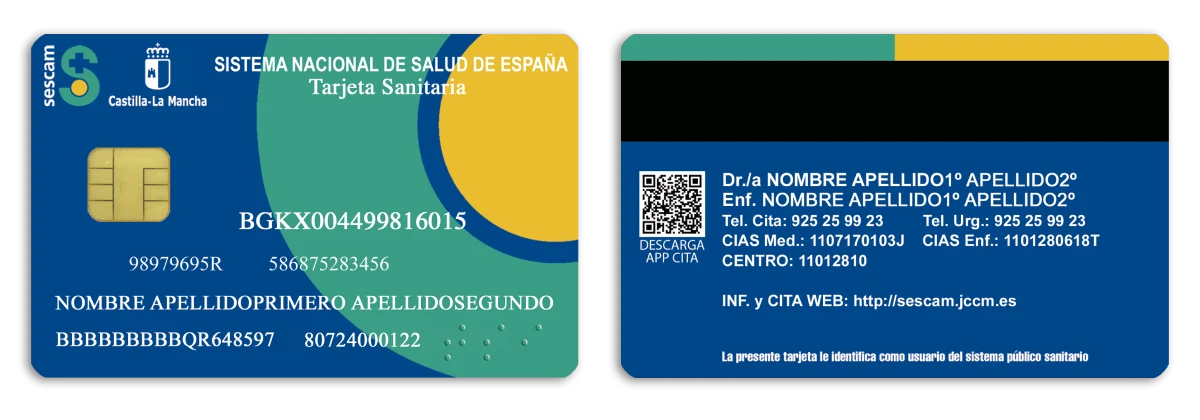
For anyone residing and/or working in Spain, affiliation becomes mandatory. This affiliation grants you the right to the Tarjeta Sanitaria (health card) and access to care at your local health center (centro de salud).
Essential Administrative Steps
To register with the INSS, obtaining your NIE (Foreigner's Identification Number) and the Empadronamiento certificate (municipal registration) is crucial. Without these two documents, you cannot register, which effectively blocks your access to the SNS.
Health Coverage in Spain: Which Option for Your Profile?
Access to the SNS is not automatic and depends on your professional situation or resident status. Here are the most common scenarios for international residents and the associated procedures.
| Expat Status | SNS Access Method | Key Point |
|---|---|---|
| Salaried Employee (Local Contract) | Automatic registration by employer with INSS. | Immediate coverage from the start of the contract (contributions deducted from salary). |
| Self-Employed Worker (Autónomo) | Voluntary registration with RETA (Special Regime). | Mandatory monthly contributions (cuota) required to activate rights. |
| Retiree (Pension from EU/EEA or Switzerland) | S1 form (formerly E121) from home country pension fund. | Transfer of health rights to Spain. Coverage identical to a local resident. |
| Student / Temporary Stay | European Health Insurance Card (EHIC). | Covers only "medically necessary" care in the public sector. |
Coverage for Expat Workers (Salaried and Self-Employed)
Salaried expats with a local contract are automatically affiliated with the Spanish social security. The employer is responsible for their registration (alta) with the INSS. For self-employed individuals or freelancers (autónomos), voluntary registration with the local RETA regime is required, involving monthly contributions to activate health rights.
Coverage for Retirees Settling in Spain (S1 Form)
This is the most common scenario for retirement plans. Retirees receiving a pension from an EU/EEA country or Switzerland must request the S1 form from their pension fund in their home country (often via an international liaison body like CLEISS for French citizens) before or shortly after their departure. This essential document allows the transfer of their health insurance rights to the Spanish system. Once this form is submitted to the Spanish INSS, you gain access to the SNS under the same conditions as a local resident.
For more details regarding retirees, consult our guide: Retiring in Spain: Your Guide to a Smooth Transition.
Coverage for Students and Temporary Stays (EHIC)
For a temporary stay (e.g., property search, short-term studies), the European Health Insurance Card (EHIC) is vital. It is free (to be requested from your home country's health insurance fund) and provides access to essential medical care within the Spanish public sector. However, it does not cover repatriation, private healthcare, or scheduled treatments.
SNS, Private Health Insurance, or International Insurance?
Access to the SNS is a solid foundation, but it has limitations that new residents don't always know. The choice of complementary coverage is often essential for a peaceful real estate project.
Limitations of the Public System (SNS)
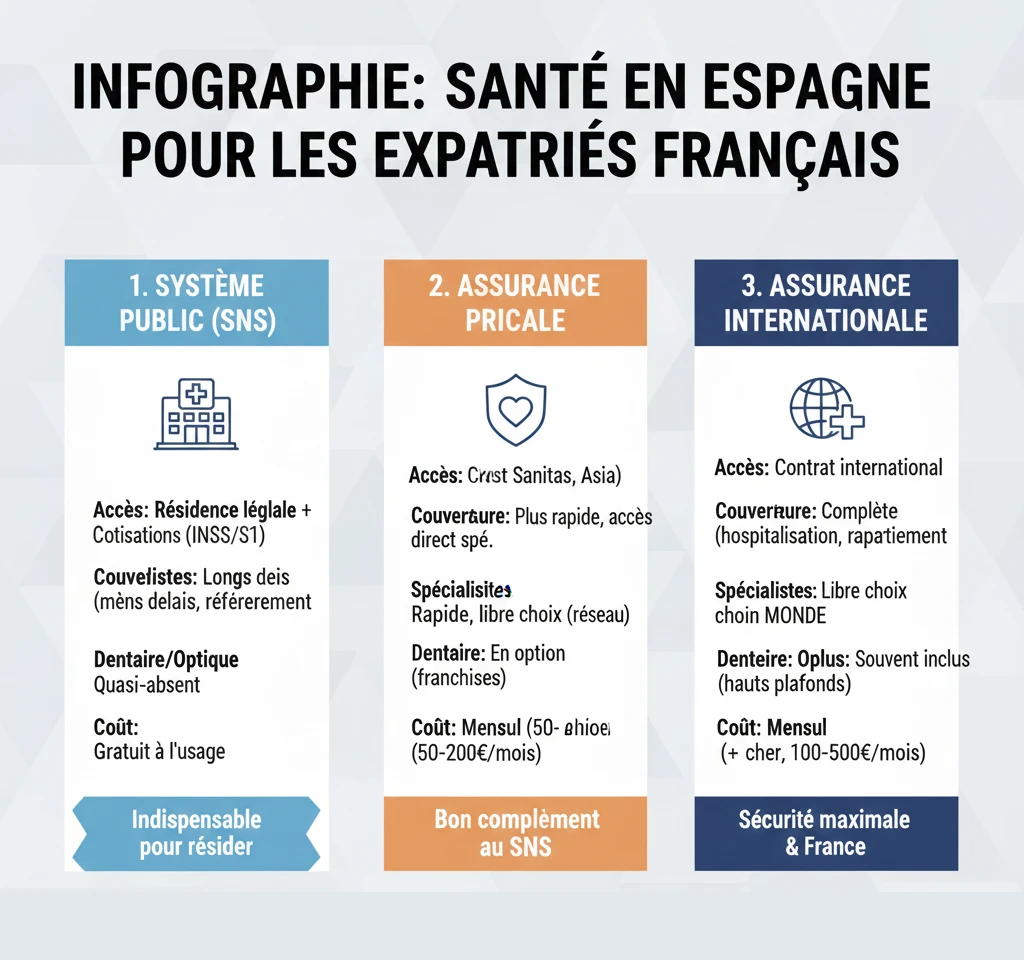
While offering very high quality for emergencies and serious illnesses, the Spanish SNS often experiences long waiting times for specialist consultations or non-urgent surgeries. Furthermore, it covers almost no dental and optical care (except for emergency extractions).
When Do You Need International Health Insurance?
International health insurance for expatriates is particularly recommended in the following cases:
- ✅ You wish to maintain comprehensive coverage in Spain AND your home country (to see your usual specialists).
- ✅ You are a mobile professional or a "digital nomad" not eligible for the SNS.
- ✅ You require maximum guarantees (high limits, dental/optical, repatriation assistance).
- ✅ You want the freedom to choose any doctor or clinic (public or private) and services in your preferred language (teleconsultation, administration).
As International Santé highlights, affiliation to the Spanish system is fundamental, but this primary or supplementary insurance offers essential protection against high private sector bills and the shortcomings of the SNS.
| Coverage Type | Access to Care | Dental/Optical Coverage | Coverage Outside Spain |
|---|---|---|---|
| SNS (Public) | Assigned public health center. Specialist referral required. | Almost none (except extractions). | Limited (EHIC for emergencies in EU). |
| Local Private Insurance (e.g., Sanitas, Asisa) | Network of affiliated private clinics and doctors. Direct access. | Optional (often with deductibles). | Very limited or none. |
| International Health Insurance | Free choice (public or private, in-network or out-of-network). | Generally included (depending on plan level). | Comprehensive (depending on zone: home country, Europe, Worldwide). |
Official Resource
To verify your rights as a European citizen in Spain, especially regarding the S1 form and the EHIC, consult the official portals of your national government or European Union institutions. For example, French citizens can find information on the official portal of the French government dedicated to expatriates: The CLEISS website – Retirement in Spain.
Conclusion
Spain offers an excellent healthcare system (SNS) for affiliated residents, but access is regulated (NIE, S1, RETA) and its coverage has limitations (dental, waiting times). For individuals accustomed to comprehensive and prompt coverage, planning your health coverage is as crucial as selecting your property investment. The most secure option, adopted by many expatriates, is to combine access to the SNS (for daily needs and emergencies) with private or international insurance for speed, comfort, and coverage of services not included.

Need help with your relocation?
Take advantage of market opportunities. Let's discuss your project.
Table of Contents
- Introduction
- How to Access the Spanish Public Healthcare System (SNS)?
- Health Coverage in Spain: Which Option for Your Profile?
- Coverage for Expat Workers (Salaried and Self-Employed)
- Coverage for Retirees Settling in Spain (S1 Form)
- Coverage for Students and Temporary Stays (EHIC)
- SNS, Private Health Insurance, or International Insurance?
- When Do You Need International Health Insurance?
- Conclusion